2026: Content Distribution Tools Are No Longer Just “Publishing” – A Deep Dive Based on Production Pain Points
In recent years we have witnessed a profound transformation in “content reach.” Tools are no longer satisfied with being simple scheduling widgets. Today, a qualified content distribution platform’s core mission has long surpassed basic “multi‑platform publishing.” It must become a hub for data, compliance, processes, and creative strategy, especially when your audience consists of global SaaS users. This article is not a feature list; it is a set of observations and practical insights drawn from repeatedly “hitting walls” in real production environments.
The “Last Mile” Bottleneck of Automated Workflows
Back in 2024, one‑click distribution to dozens of platforms was already commonplace. The real test comes after you press that “one‑click” button. We naïvely thought that configuring all API keys and setting up queues would achieve true “unattended” operation.
Reality quickly taught us otherwise. A typical scenario: we used a well‑known tool to push a deep‑technical blog simultaneously to the company website, Medium, LinkedIn Articles, and a few niche communities. The automation ran flawlessly—until we discovered that the versions posted to the website and Medium were perfect, but the LinkedIn version lost all code highlighting and key charts because it could not handle complex nested Markdown syntax. Worse, one community platform flagged the automatically posted content as “non‑native” and classified it as low‑quality, resulting in minimal initial exposure.
This made us realize that “auto‑format adaptation” in 2026 is far more than resizing images or trimming titles. It involves a deep understanding of each platform’s native content format: Twitter threads, Instagram carousel storytelling logic, LinkedIn document interactive elements, and the special preferences of technical communities like Dev.to or Hashnode for code snippets and embedded content. Simple “export‑convert” models are no longer sufficient.
Compliance and Security: From “Post‑hoc Fixes” to “Built‑in Processes”
In recent years, API rules and moderation policies of major social and content platforms have become unprecedentedly strict and dynamic. The biggest challenge at the tool level is achieving distribution efficiency without crossing platform red lines.
We once made an expensive attempt. We tried to use a tool’s “bulk content import and scheduled publishing” feature to warm up an upcoming product launch. Hundreds of pieces of content were prepared. The tool’s workflow design was very appealing: pull drafts from Google Sheets, format via templates, then add to the publishing queue. However, when handling large volumes of similar content with short intervals, it triggered LinkedIn and Facebook risk‑control mechanisms, resulting in temporary API access restrictions for several core corporate accounts, flagged as “suspected automated spam activity.” The recovery process took nearly a week, completely disrupting our market cadence.
That experience forced us to rethink our distribution strategy. Now we prioritize tools that front‑load compliance checks. An ideal workflow should embed basic compliance checks before distribution (e.g., verify allowed links, image aspect ratios, and the presence of potentially flagged sensitive words) and, the most critical step, hand the final publishing confirmation back to a human. This may sound like a step back in efficiency, but it is a risk‑avoidance measure.
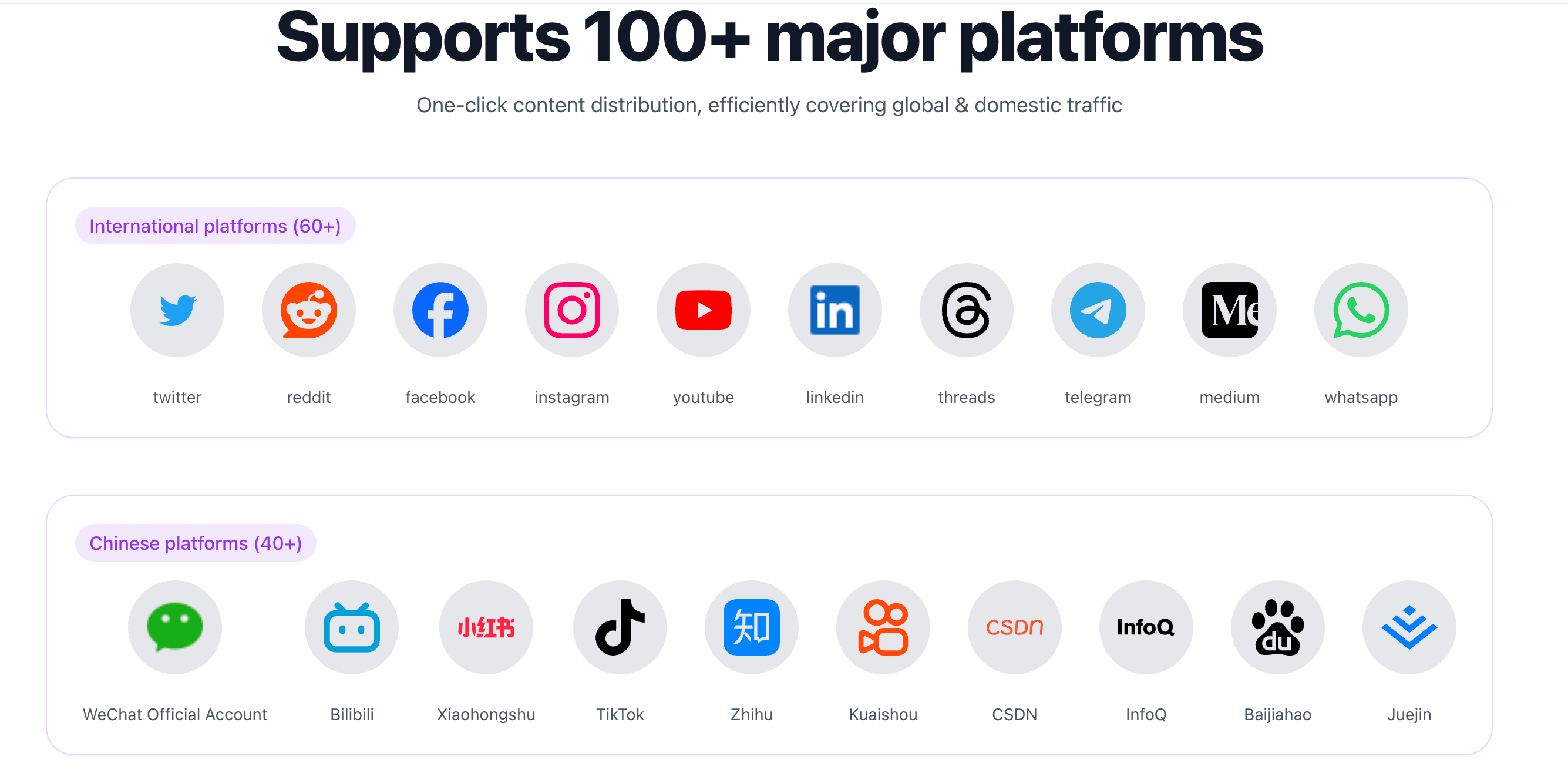
During this optimization we introduced SEONIB Flow to manage our core, high‑compliance distribution processes. SEONIB Flow’s design philosophy is clear: it focuses on efficiently and reliably routing content to predefined target platforms, but enforces manual confirmation at the final publishing stage. That “pause point” initially seemed redundant, but it has repeatedly helped us intercept issues caused by temporary policy changes or minor content mismatches. It does not try to intelligently rewrite content to fit each platform—doing so would blur our expectations of how our content performs across platforms. Instead, it acts like a rigorous conveyor belt, delivering packages to each station, while the station manager (operations staff) performs the final check and hits the “publish” button.
Data Feedback Loop: Distribution Is Not the End, but the Beginning
In 2026, the ability of a distribution tool to integrate and provide insights from “post‑publish” data is almost as important as its publishing capability. Early tools offered only basic engagement metrics (likes, comments, shares). Now we need cross‑platform attribution insights.
For example, an article on “SaaS Pricing Strategies” is simultaneously published to the website, Medium, LinkedIn, and a newsletter. A good distribution tool backend should tell us:
- How many website sign‑up conversions each channel generated.
- Which specific paragraphs or data points on LinkedIn sparked the most discussion and private‑message inquiries.
- Where Medium readers dropped off, according to reading progress data.
- How users acquired from different channels differ in their in‑product retention paths.
We once used a tool whose “unified inbox” and cross‑platform analytics dashboard were excellent, aggregating scattered user interactions and conversion data into an initial touch‑point analysis. This helped us adjust our content strategy: we found that on LinkedIn, attaching a concrete question to drive discussion generated far more high‑quality B2B leads than simply sharing a link; whereas on technical communities, articles with runnable code snippets attracted more than three times the traffic of regular posts.
These insights should, in turn, guide the next distribution strategy. For instance, can we dynamically optimize publishing times for high‑conversion channels? Can we automatically apply a well‑performing content format to subsequent posts on the same topic? This creates a complete loop from distribution to analysis to strategic optimization.
“Seamless” Integration with Existing Tech Stacks
For SaaS teams, content distribution is rarely an isolated activity. It usually starts with idea generation in Notion or Google Docs, passes through design collaboration in Figma, gets finalized in a CMS, and finally enters the distribution workflow. Post‑distribution data then needs to flow into a CRM (e.g., HubSpot) or analytics platform (e.g., Amplitude).
Therefore, a distribution tool’s ability to embed smoothly into existing workflows—like a gear in a machine—is crucial. We favor products that offer open APIs, deep integration with automation platforms like Zapier/Make, or direct connections to our source code repositories (for technical docs) and customer‑support systems. For example, when we update a troubleshooting guide in our internal knowledge base, can an automated workflow sync it to community help sections and notify the relevant Customer Success managers? Such seamless connections dramatically boost operational efficiency.
Observations on the Core Tool Ecosystem (2026 Perspective)
Based on the dimensions above, market leaders currently emphasize different priorities:
- All‑in‑One Workflow Hubs – Some tools are evolving toward a “content operations system.” They manage distribution, deeply integrate content calendars, team collaboration, competitive monitoring, and even basic content generation suggestions. They excel at complex, multi‑step cross‑application workflows, making them attractive to large marketing teams. The trade‑off may be a steeper learning curve and less specialization in certain verticals.
- Compliance‑First Stable Solutions – Like the SEONIB Flow we use, these tools prioritize account safety and controllable processes. They may lack flashy AI rewriting or smart optimization features, but they are highly reliable in delivering content accurately and compliantly to target platforms. This robustness is essential for regulated industries such as finance, healthcare, B2B, or teams that manage high‑value brand accounts.
- Data‑Driven Insight Engines – Another class invests heavily in post‑publish analytics, attribution modeling, and intelligent recommendations. They can tell you what type of content, when, and in what format performs best on each platform, and attempt to automate those decisions. Performance‑marketing teams focused on growth and ROI find this very appealing.
Choosing among them does not depend on whose “feature list” is longer, but on your core pain points: Are you worried about security and compliance risk? Are you struggling to measure distribution effectiveness? Do you need to embed distribution into a larger automation ecosystem? In 2026 there is no universal tool—only the one that best fits your current stage and constraints.
Our advice: start with the most challenging specific scenario. For example, first solve “safely and efficiently syncing a technical blog to three core communities,” rather than trying to automate the entire company’s content distribution at once. In practice, the tool’s true nature and its fit with your team will become clear.
FAQ
Q1: It’s 2026—can’t AI automatically rewrite content for different platforms? Why still need human publishing confirmation?
A1: AI rewriting is indeed improving, especially in tone and length adjustments. However, in professional domains (SaaS, legal, medical) precision and compliance are critical. AI may misinterpret technical terms or unintentionally generate language that violates specific platform ad policies or community guidelines. Human confirmation is the final safeguard against brand reputation risk and account safety issues. It ensures “controlled automation,” not a completely black‑box process.
Q3: For an early‑stage SaaS startup, should we prioritize investing in a content distribution tool?
A3: It depends on your content strategy stage. If you’re just starting with limited output (e.g., 1–2 deep articles per month), using a basic tool or even manual publishing while focusing on content quality and deepening a single channel may be the better choice. Introducing a complex tool too early can increase management overhead. When your content volume grows, you need to sync to three or more platforms, and you’re eager to know which channel is most effective, that’s the right time to consider a distribution tool to boost efficiency and build a data feedback loop. The tool should serve a validated strategy, not replace strategic thinking.
Share Article