How to Throw Content onto 100 Platforms with One Click? A Veteran’s Honest Take (2026 Edition)

Imagine this scenario: you laboriously write a masterpiece, feeling that it will explode across the internet in the next second. Then you open your computer and start posting manually—copy, paste, upload, adjust formatting, check links… After doing this 20 times, your enthusiasm is completely drained and you just want to throw the computer out the window. Congratulations, you’ve just experienced the classic “mental wear” of modern content creators.
Batch publishing content sounds like a lazy‑person’s dream, but in reality it’s about efficiency, consistency, and avoiding a split‑brain scenario. It’s 2026—if you’re still doing everything manually, it’s like trying to fight a tank with a bamboo pole. This article won’t give you a pile of flashy but useless theory; instead, from the perspective of an operator who has stepped on countless pitfalls, I’ll explain why this is so annoying and how to make it less so.
Why “One‑Click Publishing” Sounds Like a Scam
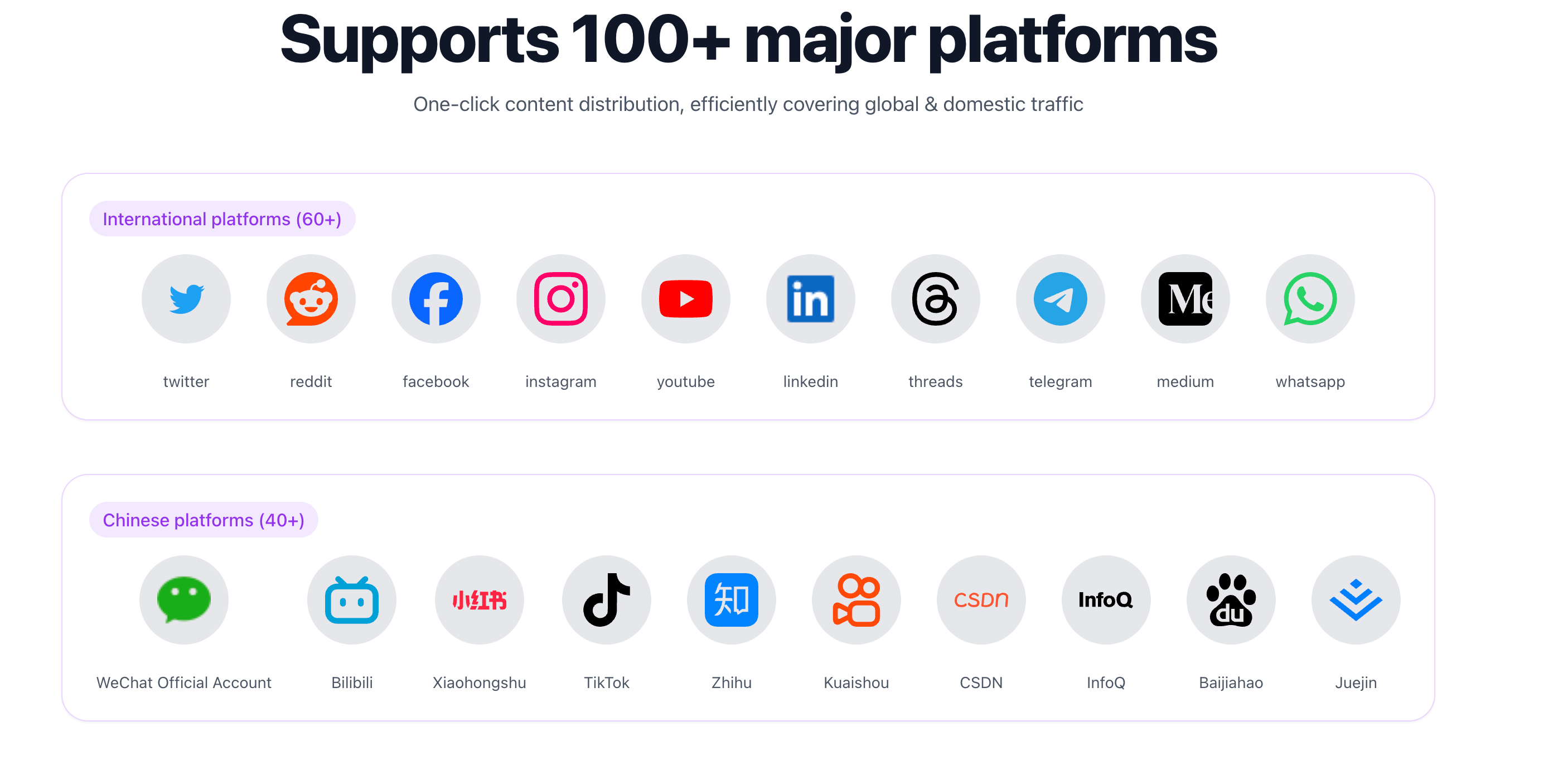
First, bust a myth: a true “one‑click publish to 100 platforms” does not exist. If you see such an advertisement, run away immediately. Different platforms have different API limits, formatting requirements, moderation policies, and even character‑emoji support. Trying to conquer all platforms with a single generic template is like trying to use the same pick‑up line on 100 dates—usually it ends in total failure.
Real automation is “creating order within controllable chaos.” You can’t eliminate human intervention entirely, but you can compress the intervention points to the few, most critical steps. For example, you might need a “publishing template” for each platform to handle platform‑specific quirks (one platform’s title can’t exceed 50 characters, another requires a specific tag). The role of an automation system is to remember all those quirks and execute them in bulk, not to think for you.
From “Manual Hell” to “Semi‑Automatic Heaven”
In the early days we tried all sorts of hacky methods: browser extensions for bulk actions, Python scripts calling APIs, even hiring virtual assistants. Each method had its own comical drawbacks.
- Browser extensions: as unstable as typing on a trampoline. When a platform changes its UI, the script breaks. Opening 20 browser tabs at once makes the computer fan sound like death metal.
- Python scripts: you need to be a part‑time programmer. Maintaining API keys, handling policy changes (e.g., a sudden OAuth 2.0 requirement), dealing with mysterious 429 “Too Many Requests” errors will make you question your life choices. And after you painstakingly debug the script, you discover that a platform changed its image upload endpoint just last night—comedy gold.
- Virtual assistants: human error rates can sometimes be higher than scripts. You’ll get messages like, “Boss, I posted the article to XX platform, but they said it contains a sensitive word. I don’t know which word.”
The turning point usually comes when you’re flooded with “publish failed” notifications from a platform and have no idea why—maybe the image size is wrong, maybe a forbidden word slipped in, maybe the platform’s API is just in a bad mood. You need a tool that centralizes task management and clearly reports failure reasons.
That’s when workflow tools like SEONIB Flow enter the picture. Its core value isn’t “fully replace humans,” but “turn the publishing process into a visual pipeline.” You can toss your content (text, images, links) into the start of the pipeline.
Platform “Personalities” and Your Countermeasures
Below are some platform “quirks” you’ll still encounter in 2026, along with non‑textbook ways to handle them:
- Image format wars: JPG, PNG, WebP, dimensions, aspect ratios, file size… Some platforms even limit GIF frame counts. Uniform pre‑processing (compressing, re‑formatting) is mandatory, but you also need to consider quality loss. Over‑compression can blur product details and hurt conversion. This isn’t a technical issue; it’s a business trade‑off.
- Link handling differences: Some platforms allow direct external links, others require links to be “dressed up” (e.g., placed at the end), and some outright ban certain types of links. Your automation strategy may need “link replacement” (swap the original link for an internal redirect) or “link hiding” (show it only on specific platforms).
- Publishing timing mysticism: Bulk publishing doesn’t mean simultaneous publishing. Sending requests to 100 platforms in the same second can trigger anti‑spam mechanisms, causing throttling or rejection. Add a manual stagger—randomly distribute publishing times over a 5‑30‑minute window—is a low‑key but practical trick.
Side Effects of Automation and Human Value
When you automate the publishing workflow, some interesting side effects appear:
- Content homogeneity risk: One‑click publishing easily makes every platform look identical, diluting your brand personality across channels. The solution is to reserve differentiation fields in the automation templates. For example, set a “snappy closing line” for Twitter and a “professional summary” for LinkedIn. Automation executes the differences, not the sameness.
- Slower feedback loops: With manual posting you see comments and likes instantly. After full automation you may need an extra “feedback aggregation dashboard” that pulls interaction data from each platform; otherwise you lose the sense of how your content is performing. Automation helps publishing, but it can’t automate analysis and optimization.
- Lag in responding to platform changes: Policies, APIs, and UIs evolve. Your automation pipeline needs regular “health checks.” Set a quarterly checkpoint to manually test each platform’s publishing channel and verify that formatting requirements haven’t changed. Relying entirely on automation without maintenance will eventually hit a wall.
In the end, automation amplifies your efficiency, not your judgment. It’s best suited for repetitive, tedious, rule‑driven steps. Content strategy, platform relationships, crisis handling (e.g., a post that triggers backlash) still require a human brain.
Building Your Publishing Pipeline (Practical Edition)
If you plan to tackle this in 2026, follow a less‑exciting but less‑painful path:
- Pick core platforms first, not 100: Start with the 5‑10 platforms that truly give you influence or conversions. Master their publishing rules and build a stable process.
- Define your “content package”: What goes with each article? Title, body, 3 images, 2 links, 5 tags? Standardize these elements.
- Find connectors: Assess your technical ability. If you can tinker with APIs, try general tools like Zapier or Make. If you want tighter management and deeper integration, consider a workflow platform built for content distribution like SEONIB Flow. The key is whether it covers your core platforms and offers clear error handling.
- Test with real content at scale: Don’t start with a “Hello World.” Use a genuine, medium‑length article with images and links, run the whole flow. Observe each step’s actual output, especially formatting, link status, and image rendering.
- Set up monitoring and alerts: When a publish fails, you need to know immediately, not a week later. Use the tool’s notification features (email, Slack) or build a simple log monitor yourself.
- Iterate, don’t revolutionize: Automation systems improve gradually. Adding a new platform or a new content type (e.g., video) will likely require tweaks. Treat it as an ongoing maintenance project, not a one‑time magic solution.
The ultimate goal isn’t “press a button and watch content fly everywhere,” but “maintain the widest possible content presence with the smallest daily effort.” The time you save should be spent creating better content or analyzing data, not battling copy‑paste buttons.
FAQ
Q: Should I develop my own publishing system?
A: Only if your core business is building tools, or you have a strong technical team and a willingness to maintain it long‑term. Otherwise, using existing professional tools is usually more economical (time and effort). Building your own may save money initially but maintenance, adaptation, and troubleshooting costs quickly become high.
Q: Can automated publishing handle comments and interactions for me?
A: Publishing and interaction are two different things. Automated publishing is a one‑way output; comments and interaction are two‑way communication that involves nuanced context and human tone. Trying to fully automate interaction often ends up feeling cold or odd.
Q: With so many platforms, how do I know where my content performs best?
A: After automating publishing, you need a complementary data collection process. Use analytics tools (platform‑specific dashboards, Google Analytics, or dedicated cross‑platform analytics) to centralize metrics like views, engagement rates, and conversions. Automation solves distribution, but analysis and optimization still require manual effort (or another set of automation tools).
Share Article